

Recently, the Paul John Indian Whisky founder Mr Paul P. John was in London. I got the chance to talk to him. Naturally, I took it.
Our conversation isn’t focused on the usual “India is an emerging whisky nation” framing because that story is already old. Indian single malt whisky now sells greater volumes domestically than imported malts in India. Distilleries are winning major global awards with alarming regularity. Drinkers aren’t buying Indian whisky as a novelty anymore either. They’re buying it because they want to drink it.
That’s the story. The one we talk about is about a man from Bengaluru who started drinking single malt with Sprite, and how he built one of the defining names in modern whisky.
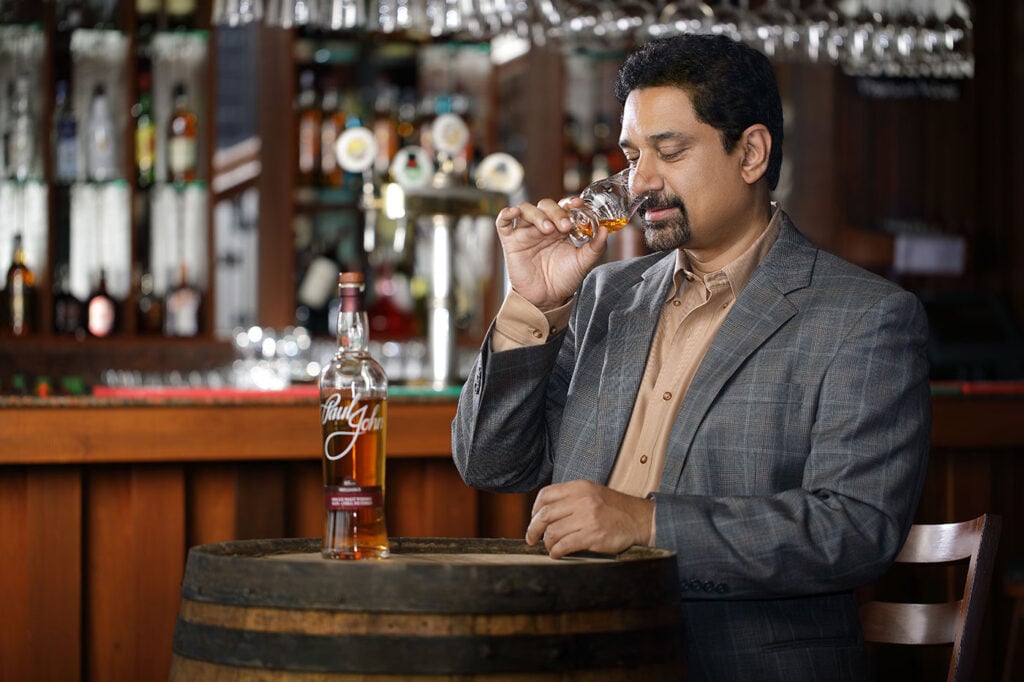
Say hello to Mr Paul John
From volume whisky to single malt obsession
Mr Paul P. John’s whisky journey didn’t begin with romantic notions of craft distilling. It began with scale. Born in Kerala but spending much of his formative years in Bengaluru, John entered the alcohol business in 1992.
By 1995, he had transformed the business into a private limited company under the Paul John name. A period of rapid expansion followed across neighbouring Indian states and eventually he was helming one of the country’s largest liquor businesses by volume.
Today, John Distilleries operates across eight production facilities in seven Indian states. Its flagship mass-market whisky brand, Original Choice, reportedly sells more than 22 million cases annually and ranks among the world’s top 10 whisky brands by volume.
“I was actually catering to the domestic low-margin, high-volume business, so I had a few other brands before. That’s what gave us the bread and butter.”
But whisky nerds rarely dream about volume statistics. They dream about flavour.
Embracing the joy of single malt
“I wanted to do something that was more fun, something I enjoyed. That’s what set me out to get into the premium stuff.”
There’s something wonderfully honest about the way John talks about whisky discovery too. He doesn’t have a polished origin myth about grandparents rubbing Famous Grouse into his gums or childhood nosing notes beside a fireplace.
“I was never a single malt drinker until I started travelling. It was wine first, we still have a winery and do wine tasting, then I graduated to drinking single malt. I started drinking with Sprite, then gradually just with ice, then realising what was going on. Glenmorangie really caught my imagination.”
Honestly, there’s something refreshing about hearing that from a major whisky figure. Plenty of people discovered single malt through imperfect serves and bad decisions.
That fascination soon turned into obsession and, eventually, inspiration.
“I started almost 20 years ago. I’d been travelling, drinking my interest, which was single malt. I started doing my research because we always wanted to understand how Scotland makes great single malt. I did a lot of trips there. Nobody was making Indian single malt then, so we were driving into unknown territory.”
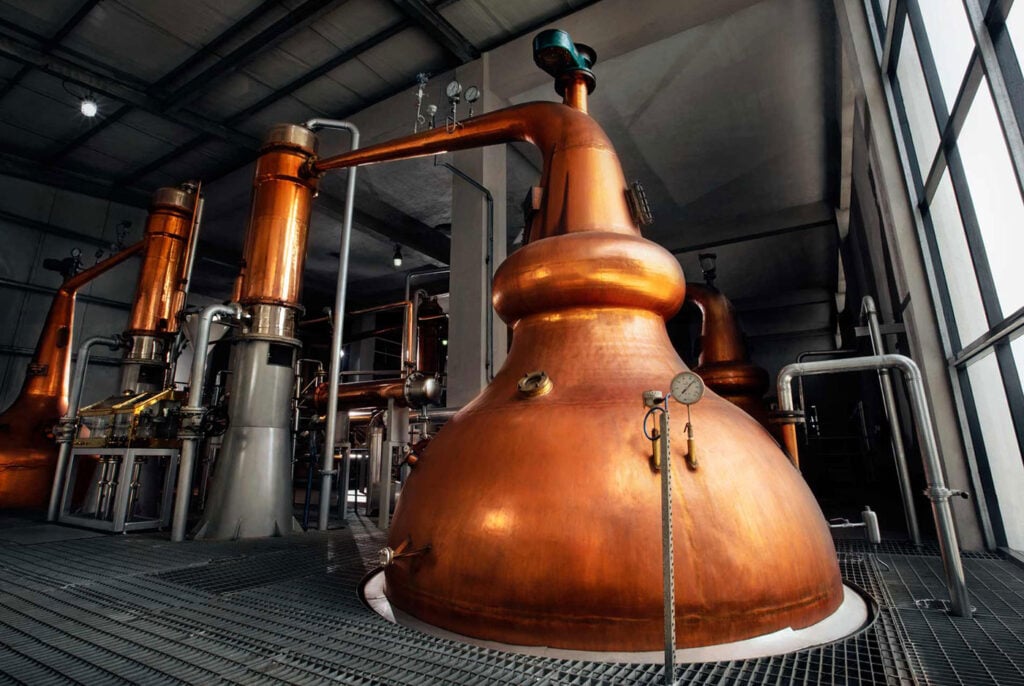
The pot stills at Paul John
“Shooting into the air”
The early years of Paul John whisky sound wonderfully fuelled by instinct and stubbornness. From the beginning, he was committed to creating an Indian whisky that tasted unmistakably Indian. And it needed to be right. After all, it has his name on it.
Goa became the home of the distillery and, ultimately, the defining influence on the whisky itself. It was initially John’s holiday spot.
“Goa was a place I used to really love. I would go there for New Year’s. Although I was headquartered in Bangalore, it was a very fun-loving place. The weather seemed good, the water also was quality,” John says. “I had no clue where it was going. We’ve never had any consultants from Scotland. We were shooting into the air. Let’s fire and see what falls down, you know, and it was all indigenously developed.”
Many modern whisky projects are built around imported consultants and borrowed Scotch legitimacy, and there’s nothing wrong with that. But it’s exciting picturing those early Paul John days: the trial and error, adapting to Indian conditions, and digging for the style he wanted.
“Since I liked the fruity notes, I did a lot of research on the Glenmorangie pot still design, long neck, upward lyne arm, so we would get those sweet notes. That was the inspiration for the designers. By the fourth year, we realised, it’s not bad, you know, better than I realised. That’s when we knew we could produce something world class. Gradually we started increasing the bar, like how you do a high jump.”
Barley, colour, and terroir
As the whisky improved, so did the ambition, and that attitude explains a lot about the modern Paul John range. Everything sits at 46% ABV or above, aside from the entry-level Nirvana at 40%. John seems slightly pained that’s the case too, begrudgingly accepting it’s fine to have one accessible whisky that sits lower. The whiskies are non-chill filtered and presented without caramel colouring or additives.
The raw materials also deliberately lean local wherever possible. The barley itself comes from the foothills of the Himalayas, alongside local spring water and locally grown yeast.
“That’s three ingredients across the majority of our whiskies, and they are fundamental to the flavour profile. The heat, the humidity, the barley, the water, the yeast. They all give a very unique flavour to our whisky. It obviously tastes unique, even to other Indian single malts. Terroir, right?”
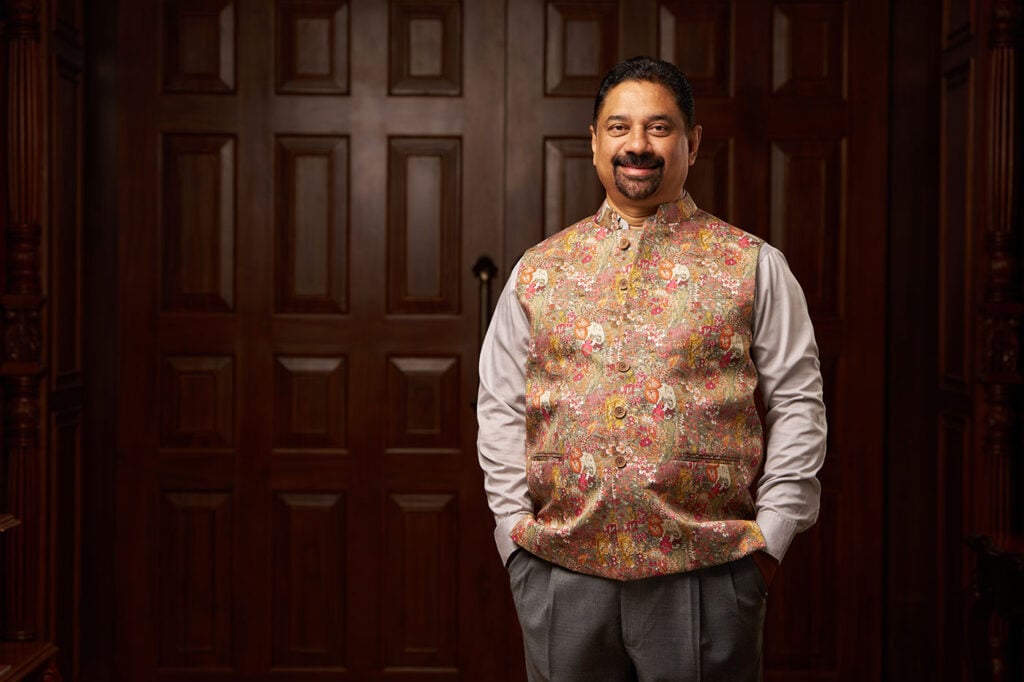
The whisky has his name on it, so it’s worth making right!
Six heads is better than two
Most Scotch whisky is made with two-row barley because it’s efficient, consistent, and produces a clean spirit. Paul John uses Indian six-row barley. The names literally describe how the grains grow on the barley head. Two-row barley grows in two neat columns of kernels, while six-row grows in six. That changes the grain’s chemistry and structure.
Generally speaking, two-row barley produces larger, starchier kernels, while six-row barley produces smaller kernels with more protein and enzyme content. The higher protein content means there are more amino acids, lipids, and other compounds hanging around during fermentation and distillation. Those compounds can translate into heavier congeners, richer cereal notes, and a thicker texture in the final spirit.
“We realised it has more oils, and so it gives you a lot more character,” John says. “And I am a big fan of the non-chain filtered whisky, where the oils are so important”.
Peat should complement, not dominate
There is one major ingredient Paul John cannot source locally: peat.
With no choice but to import, the peat comes from just outside Aberdeen and is intentionally chosen for being lighter Highland peat rather than heavier island styles. But even then, Paul John approaches peating differently.
Standard peating methods typically involve peat smoke directly roasting the barley. Paul John instead heats the peat separately before wafting smoke across the grain from another chamber. The goal isn’t to flatten the whisky beneath smoke.
“Peat should complement the whisky flavour, not overpower it.
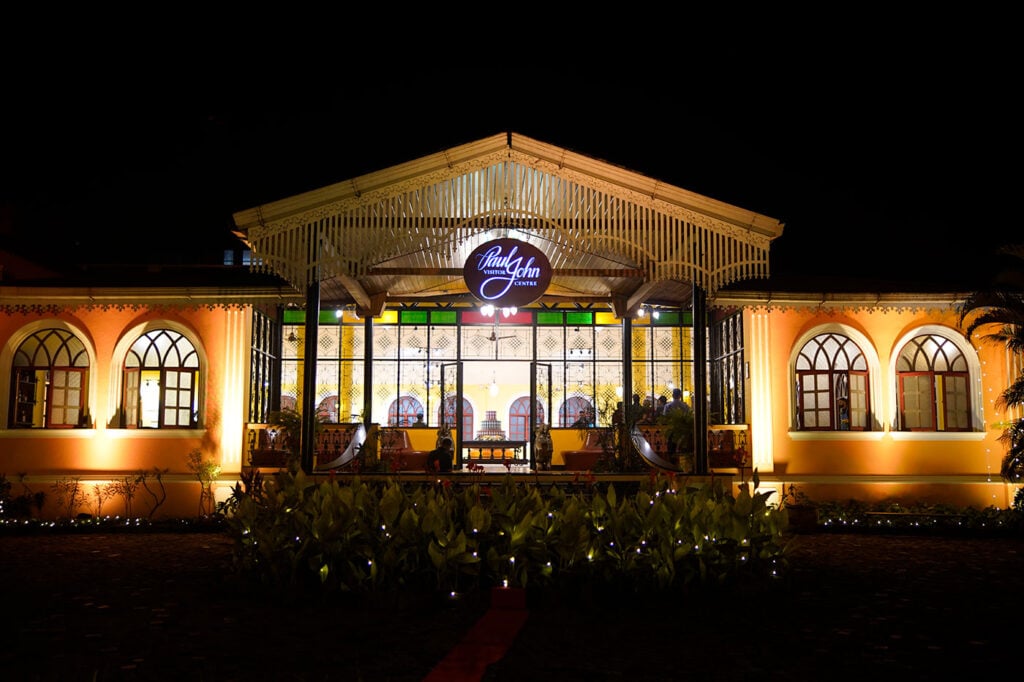
Want to learn more about Paul John? They have a visitor centre
Why Indian whisky tastes different
The Goan climate is the headline difference-maker for Paul John whisky. A place where the sun shines nearly every day and the coastal humidity leaves its mark. Communicating that impact is difficult without becoming reductive, however, and warm-weather whisky maturation remains one of the most misunderstood subjects in whisky. Too often the conversation stops at “it matures faster because it’s hot”.
The reality is far more nuanced. John explains it with tea.
“If you take a cold glass of water and put a tea bag in it, you get a bit of colour. You get a warm glass of water, put a tea bag in it, you get colour and you get flavour straight away. That’s why we say we get really mature liquids in a much shorter space of time, or that one year of tropical ageing is equivalent to four years of ageing in Scotland.”
But it goes deeper than that because, unlike many hot-climate whisky regions, Goa’s humidity creates a very different maturation profile.
“Because the atmosphere is already wet, we don’t lose a lot of liquid. We lose ABV. Take our Paul John Classic, that’s a cask strength that’s been aged for seven years,” John explains. “You make the liquid at about 63% to 64% ABV. Over that seven-year period, the ABV is naturally lost, so when we come to bottling age around six to seven years, it’s closer to 55.2% already, so we don’t have to dilute it as much when we bottle it.”
He contrasts this with other hot-climate whisky regions where producers often lose water rather than alcohol, resulting in rising ABV during maturation and heavier dilution before bottling.
“Basically, with Paul John, you get more of the cask in the bottle than you do with other brands.”
Alchemy, Christmas, and Paul John’s price philosophy
If Paul P. John built the company, master distiller Michael D’Souza seems determined to keep pushing against its walls. One member of the team described him as an “alchemist”, recalling visits to D’Souza’s office at the distillery: a long, narrow room lined with bottles, pipettes, jars, glasses, and ongoing blending experiments.
Another added: “You never know what he’s gonna pull out of his hat.” At the World Whiskies Awards 2026, D’Souza was named Master Distiller of the Year, while the Paul John Visitor Centre Team took home the title of Visitor Attraction Team of the Year.
That obsession with flavour precision also explains Paul John’s unusually broad portfolio. The range now includes the flagship expressions Brilliance, Edited, and Bold, alongside the Select Cask series, Zodiac series, annual Christmas Editions, and various limited releases.
The Christmas Editions sound especially interesting because they apparently function less as cynical annual collectables and more as flavour experiments. The pricing strategy around these releases also feels unusual in modern whisky.
“We want people to taste it,” John says. “One of my philosophies is to give good quality at a good price. To be honest with you, profitability on the single malt for me is still not all that great!”
The whisky industry increasingly feels obsessed with scarcity, collectability, and luxury positioning. Hearing a founder talk like this is almost radical.
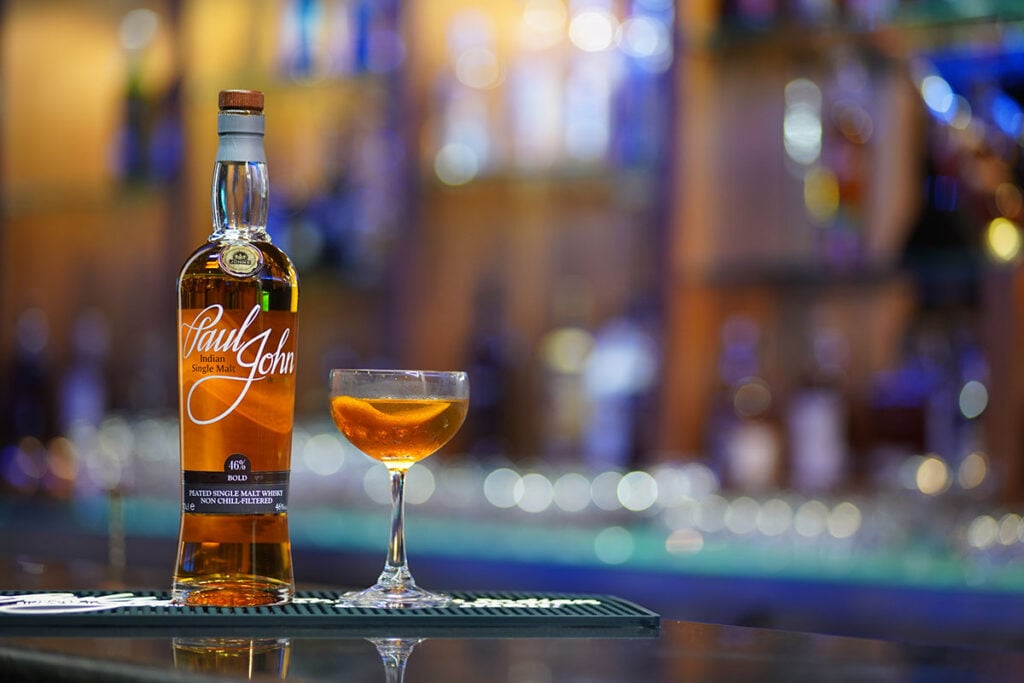
How do you drink your Paul John whisky?
Indian whisky grows up
When Paul John launched internationally in 2012, much of the whisky was exported first. Selling in India came three years later. The idea was to build international credibility through awards and critical recognition before introducing the whisky domestically.
The domestic market has transformed since then. Originally, roughly 60% of production was exported and 40% sold within India. Today that balance has flipped dramatically. Indian consumers increasingly want premium Indian whisky.
Partly this is cultural confidence. Partly economic growth. Partly the influence of Modi government’s “Made in India” initiatives and the huge CSD military canteen network, which gave Indian whisky brands massive visibility.
“The local market is very exciting. Regulation makes it more like working with 28 countries and it’s very challenging, but as far as the population is concerned, it’s the largest single malt market in the world and there are enough people who have got the money to start spending.
“With most whiskies, when demand goes up, you produce more, maybe you cut corners to increase output with caramel colouring and lower ABV, etc. But here, demand goes up, we only have what has been maturing in cask for the last six years. We have doubled and tripled our capacity over the last 10 years. We went from 2,000 litres per day, to 3,000, 6,000, then 10,000. Now we are at 12,000 litres per day. I’m hoping we will be able to catch up in the next few years.”
Regulation and reality
At the same time, India remains one of the world’s most heavily regulated alcohol markets.
“I have never seen alcohol being as regulated anywhere like India. Every bottle that is produced has a monogram sticker that has been issued by the government, numbered, and tracked across the states.”
That complexity partly explains why major producers formed the Indian Single Malt Association (ISMA), with John as a founding member. The goal is to protect standards before poor-quality imitators damage the category.
On 20 February 2025, the ISMA submitted a petition to the Geographical Indications Registry to establish Indian Single Malt Whisky as a protected Geographical Indication.
John is clearly proud of what has been achieved so far and gives credit to fellow members including Amrut, Rampur, Indri, and Godawan for creating single malt worth championing.
“We have achieved much more than I dreamed of, but I think the Indian consumer is just evolving into single malt. So in the next 10 to 15 years, it will be good for us to establish ourselves, not just in terms of volume, but ideally I would like us to be known for producing lots of different types of single malt at really high levels.”
Around the world with a medal or two
Paul John is now in 44 countries. “Japan has done very well for us, so has Taiwan, South Korea, Europe, and of course the US also. There’s a lot of curiosity. Nobody expects India to create something of international quality. In new territories we tell the story of how far we’ve come”.
Curiosity is a core driver for new Indian single malt customers, according to John. “It’s not only India now producing good quality single malt. You have Taiwan, Japan, New Zealand, Australia. An Italian single malt I tasted recently was very good. Anybody and everybody is making single malt, so that curiosity drives a perspective where people understand there are other countries doing this, so why not try Indian single malt?”
What helps build on that is awards. Paul John is India’s most awarded single malt. “When you have 380 awards to your credit and every expression of ours has won an award, then they have to be good. That adds to the curiosity.”

Paul John whisky is showing no signs of slowing down
Paul John: Restless whisky
Perhaps the most impressive thing about Paul John is that despite the awards, the global expansion, and the rise of Indian whisky itself, the distillery still sounds restless.
“We have 16 or 17 variations,” says John. “I don’t think anybody is making such a huge range. Port casks. Madeira. PX. Oloroso. Peated. Unpeated. Higher strength. Lower strength. Zodiac bottlings. Christmas Editions. Experimental releases. We’ve tried a lot of experiments. The sales people want less, but we are going faster with variants because we want to try so much.”
That’s probably the real takeaway from spending time with Paul John. Not that Indian whisky can compete. That argument already feels settled. It’s more that Indian whisky is too busy with its own future to spend its life chasing somebody else’s past. Barley varieties, climate, maturation, regulation, experimentation, and long-term growth… This is no longer about novelty.
Indian whisky isn’t an outsider anymore. And the people behind it still sound hungry. In the refusal to sit still, the willingness to release oddities, take risks, and keep pushing flavour in new directions rather than endlessly polishing the same story. Where old world whisky has history, Indian single malt has energy. And energy changes industries.



