

Campbeltown is whisky’s ultimate romantic underdog. The tiny town was once the ultimate whisky region, housing more than 30 distilleries. Today there’s three, but a new wave is on the way. Including Witchburn.
It’s built on a former US Navy SEALs site and is launching into one of the toughest whisky markets in years. This isn’t a story about another shiny visitor centre promising luxury experiences and collectible bottles before the stills are warm. At least, that’s not what Witchburn wants it to be.
The pitch is roots, flavour, and authenticity. The reality is a £6 million project trying to navigate a cooling whisky economy. To understand better, we spoke to Alexander Springensguth, founder and director of Witchburn and head of distilling/master distiller Andrew Nairn.
This is their story. *Law and Order DUN DUN*.
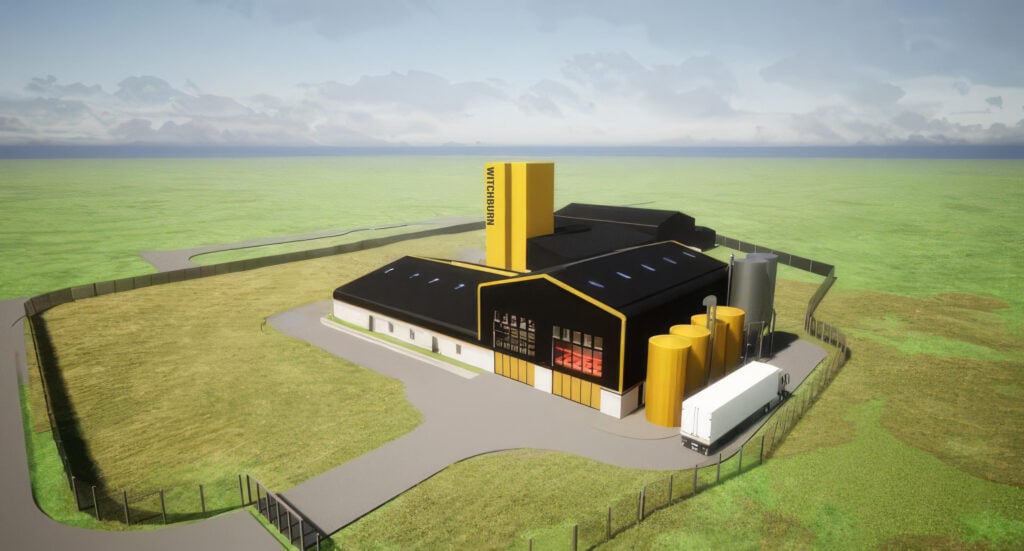
What Witchburn aims to create
Question: What made you believe now was the right time to build a new distillery in Campbeltown?
Alex: “Campbeltown has always had a certain gravity in the whisky world. Even during periods when the town struggled commercially, people still spoke about Campbeltown whisky with huge respect. For us, it never felt like a “trend” location — it felt unfinished, almost waiting for another chapter.”
“At the same time, obtaining genuine Campbeltown spirit has become increasingly difficult. Demand is extremely strong, both from enthusiasts and from the wider industry. But more importantly, we had our own vision of what a modern Campbeltown whisky could be: complex, mouth-filling, coastal, slightly untamed, but still elegant and deeply drinkable. And honestly, we simply fell in love with the place. It’s remote, windy and not always convenient — which is probably part of why it still feels authentic.”
Q: You describe Witchburn’s goal as creating a “genuine Campbeltown make”. What does that actually mean in flavour and production terms?
Andrew: “For me, Campbeltown whisky should have texture and weight. It should feel mouth-filling, and we want complexity, coastal character, sweetness, oiliness, and, naturally, for a west coast distillery, peat.”
“Production-wise, that means long fermentations, heavy interaction with copper, multiple peat levels, and a spirit cut designed around the aimed flavour profile. We are also working with different distillation temperatures, including a proprietary high-temperature style inspired by traditional direct-fired stills.”
“We’re not trying to make a generic modern Scotch whisky. We want something that immediately makes people think: this could only come from Campbeltown.”
Q: How much of Witchburn is inspired by historic Campbeltown whisky, and how much is about creating something modern?
Alex: “Probably both equally. There’s enormous respect for Campbeltown’s history and for its role as the former whisky capital of the world. You can still feel that history when you walk through the town. We take that very seriously.”
“At the same time, we never wanted to build a museum piece. Technically, Witchburn is extremely modern: fully electric production, very high heat recovery, highly efficient engineering and a strong environmental focus. The challenge is combining old-school whisky character with modern thinking. Traditional flavour profile, modern execution.”
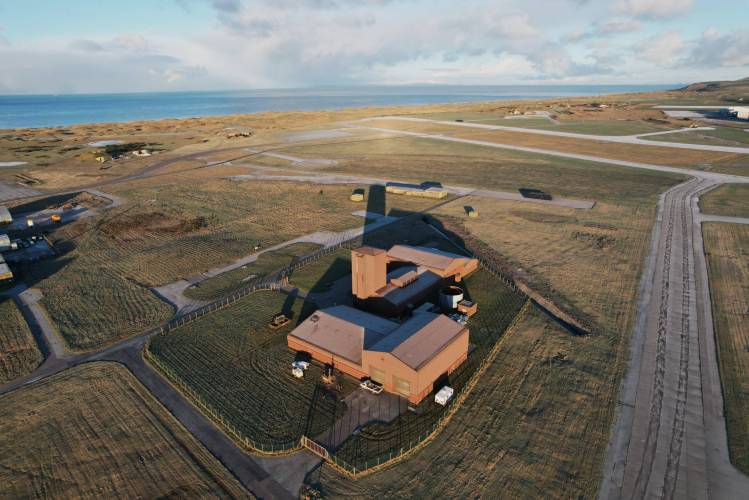
Here’s how the site looked at the start of the year
Q: Campbeltown whisky has always had a slightly rough-edged reputation. Do you see that grit as part of the appeal?
Andrew: “Absolutely. Campbeltown whiskies tend to have personality. They don’t always try to be polished or universally approachable, and that’s exactly why many people love them. There’s a confidence to them.”
“Campbeltown often asks a little more from the drinker. The complexity can be subtler, slightly more rugged, sometimes even a bit challenging. But when people fall in love with Campbeltown whisky, they usually fall very deeply. We definitely see that character as part of the appeal rather than something to smooth away.”
Q: If Witchburn whisky tasted technically excellent but didn’t feel unmistakably “Campbeltown”, would you consider that a failure?
Andrew: “In a way, yes. You can produce technically flawless spirit almost anywhere in Scotland. But that alone isn’t enough. If people tasted Witchburn and felt it could just as easily have come from another region, we would probably feel we had missed something important.”
“That said, we also operate a very commercially driven distillery model. If blenders and bottlers are trying to break down the gates to buy spirit from us, that’s not the worst problem to have.”
“The real goal is achieving both: commercial demand and a genuine sense of place. Every new distillery talks about heritage.”
Q: What’s one thing Witchburn is doing that genuinely feels different rather than nostalgic?
Andrew: “We are not trying to recreate the past cosmetically. The buildings themselves already carry a very unusual history — former military infrastructure connected to the US Navy and the Cold War era — and we chose to repurpose those structures rather than build an artificial “heritage-style” distillery from scratch.”
“But technically, the biggest difference is probably our approach to distillation. We are reviving aspects of high-temperature production associated with traditional direct-fired stills, but doing so in a controlled, modern and environmentally efficient way. So rather than imitating history visually, we are trying to recover certain flavour philosophies that largely disappeared from modern industrial whisky production.”
Alex: “And ultimately, we do not necessarily want Witchburn to become famous for its buildings. We want it to become known for the character and quality of the whisky itself. You’ve openly mentioned difficult trading conditions over the past 18 months.”
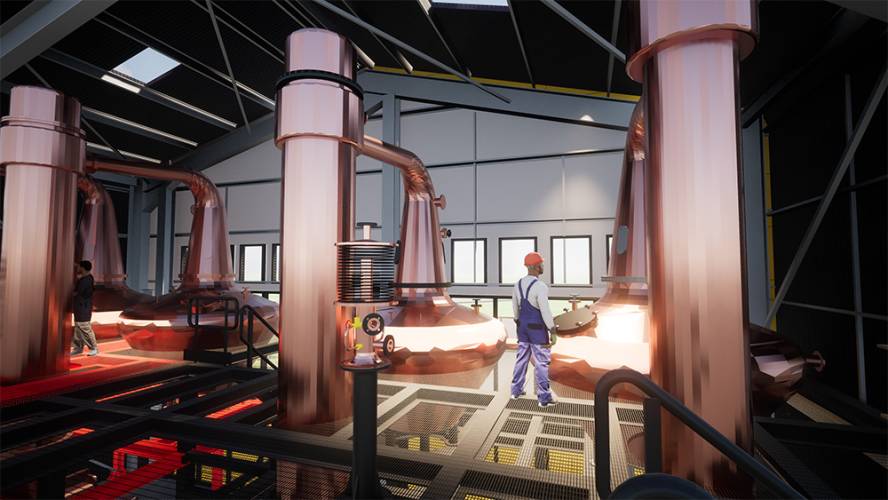
The distillery wants to create genuine Campbeltown whisky
Q: How close did the project come to stalling?
Alex: “There were definitely moments where things became extremely difficult. Partly because of wider market conditions, but also because large-scale construction projects rarely unfold exactly as planned. Some building and engineering challenges became significantly more complicated than expected, which caused delays and forced us to redesign certain parts of the project during construction.”
“That was frustrating financially and emotionally. But at no point did we lose belief in the project itself. In some ways, difficult periods force you to become more disciplined and more realistic. The project today is probably stronger and more commercially focused because of those experiences.”
Q: Why did you choose the investment structure of twenty 1% shareholders instead of one major backer?
Alex: “First of all, we are actually open to both structures. The 1% programme was created because we genuinely liked the idea of allowing a small number of people to become part of the distillery’s long-term story in a very direct way. £300,000 is obviously still a substantial investment, but for the Scotch whisky industry, owning part of a new Campbeltown distillery is a relatively rare opportunity.”
“At the same time, we are also speaking with larger strategic investors interested in acquiring more significant positions. In reality, the final structure may well become a combination of both. What matters most to us is finding long-term aligned people rather than simply the fastest capital.”
Q: The whisky world has become crowded with cask investment schemes and luxury promises. How do you convince people this is a serious long-term distillery project?
Alex: “Our investors are investing into an operating distillery business, not into casks. They can visit the site, walk through the buildings, see the equipment, meet the team and understand the production model directly. We are not selling a fantasy of rare bottles twenty years in the future. We are building real production infrastructure.”
“Of course there is an emotional side to whisky, and we embrace that. We want investors and shareholders to feel genuinely connected to the project and close to what is being created behind the scenes. But underneath that emotion, there has to be a commercially sustainable business. Otherwise none of it matters long term.”
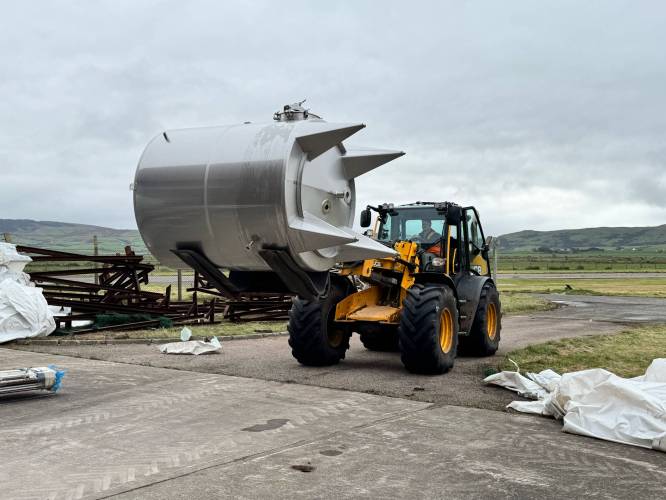
It’s a sizeable project with a lot of ambition behind it
Q: There’s a lot of whisky being sold today before it’s even mature. How do you stop excitement turning into overpromise?
Alex: “By staying realistic. It is not our job to change the entire whisky market, and we are not interested in creating artificially inflated luxury positioning or impossible scarcity narratives. We want to make genuinely good whisky and offer it at a fair level for the quality. The industry has seen periods where hype moved faster than reality. We try to stay very grounded about what Witchburn actually is: a working distillery with a long-term production strategy.”
Andrew: “If the whisky becomes exceptional, great. But we would rather understate and surprise people later than promise perfection before the spirit even exists.”
Q: You’re asking investors to buy into a distillery before a drop of spirit has run. Is that terrifying, exciting, or both?
Alex: “Definitely both — but probably more exciting. Creating a new distillery from nothing is one of the rare moments in whisky where people can still participate in the beginning of a story rather than simply buying the finished product decades later.”
“Investors can walk through the site with us, see the stills, see the fermenters, stand inside the buildings and watch the final stages taking shape. There’s something very special about witnessing that process in real time.”
“Building something entirely new is always slightly terrifying. But if it wasn’t, it probably wouldn’t be worth doing. The guaranteed buyback option after five years is striking.”
Q: How confident are you in the long-term economics behind Witchburn?
Alex: “The confidence comes from the business model itself: Witchburn was designed specifically to avoid the traditional cash-burn problem many young distilleries face while waiting years for whisky to mature. A significant proportion of our production is intended for commercial new make sales and contract distillation, including customised spirit profiles for industrial and blending clients.”
“We already see strong interest from Asia, Eastern Europe and Scotland itself for those production capacities, first orders are already placed, even without having the opportunity to taste the spirit!”
“Only a part of the annual production is retained for long-term maturation under the Witchburn name. That combination — immediate revenues alongside long-term stock creation — is what underpins our confidence in the economics of the project.
Q: What production decisions have you made specifically to shape Witchburn’s character? Fermentation, still shape, peat, casks, yeast, all the nerdy stuff.
Andrew: “I could probably bore you for days with this one. We use 96-hour fermentations, liquid yeast systems, multiple peat levels ranging from unpeated to heavily peated spirit, and two very different distillation approaches — approximately 115°C for certain commercial styles and significantly higher temperatures for our proprietary production style.”
“The stills and condensers were designed to maximise copper interaction while simultaneously achieving very high heat recovery efficiency. That combination is technically quite unusual. And then there is the cask programme, which Alex has probably become slightly obsessed with. A frightening amount of time has gone into wood policy, filling strategy and long-term maturation planning.”
“The goal is not just to make good young spirit, but spirit that evolves in a very distinctive way over time.”
Q: The site’s former life as a US Navy SEALs base — has that history influenced the identity of the distillery at all?
Alex: “First and foremost, we saw an opportunity to repurpose extremely solid industrial buildings that had been sitting largely unused for decades. From a sustainability and capital-efficiency perspective, that made enormous sense.”
“But at the same time, the history undeniably adds character to the site. Particularly in the United States, people seem genuinely fascinated by that connection. We do not want to exploit it artificially, but we absolutely respect it as part of the location’s story.”
Q: Ten years from now, what do you hope people say about Witchburn that they can’t say about any other Campbeltown distillery?
Alex: “Hopefully something like: They actually built something new without losing the soul of Campbeltown. And ideally: I can’t believe I had the chance to invest that early and didn’t do it.”



